France consistently ranks as one of the world’s most popular countries to visit. Travelers are drawn to world class attractions, an excellent culinary scene, premium wineries and more. France’s vast coastline offers idyllic beach getaways during the warmer months. Then the Alps hosts many skiing and snowboarding trips during winter.
France is a diverse country both culturally and geographically. I’ve visited the country many times over multiple decades, and still enjoy visiting Paris for a variety of great reasons – most recently during the 2026 French Open. But we also enjoy exploring different regions and experiencing the distinct differences firsthand. France has been especially hot this summer, so be sure to check reviews that air conditioning works well in your accommodation. Here’s 12 of the most unique towns in France with personal tips for visiting each of them!
1. Strasbourg
Strasbourg’s half timbered houses nestled along picturesque canals offer a lovely setting for visitors. Located in the Grand Est region of France, along the German border, the capital of Alsace features a fusion of cultures. Since Strasbourg has frequently shifted between France and Germany over its history, the town features a distinct Franco-Germanic atmosphere in its architecture, food and language.
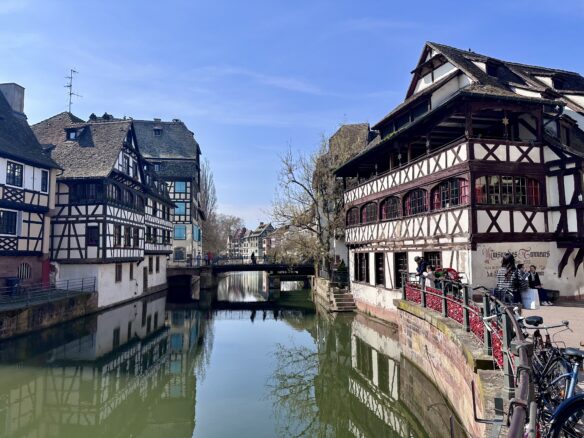
Le Petit France is the oldest, most unique and photogenic quarter of Strasbourg, which has earned the nickname Little Venice of the North. The pedestrian island is packed with wonderfully preserved buildings from the 1500’s, featuring pastel colors, sloping roofs and half timber facades. Due to the abundance of water from the Rhine River, there was once a high concentration of fishermen’s, tanners’ and millers’ shops. Today the area is idyllic for a romantic stroll, with charming restaurants to enjoy local Alsatian cuisine.
Past territorial disputes meant that Strasbourg has had a tumultuous history. For that reason, it was chosen as a seat of the European Parliament, the Court of Human Rights and the Council of Europe. The EU Parliament meets there for one week every month throughout the calendar year, mixing things up from their more frequent plenary sessions in Brussels. It’s worth visiting the European Parliament, but be sure to bring your passport to get through the security screening. Visitors then get a name badge printed.
2. Menton
Nestled along the border of Italy, Menton is one of France’s most beautiful towns. Perched atop a hill overlooking the sea, the town’s vibrant pastel colors combine for an array of postcard worthy highlights.
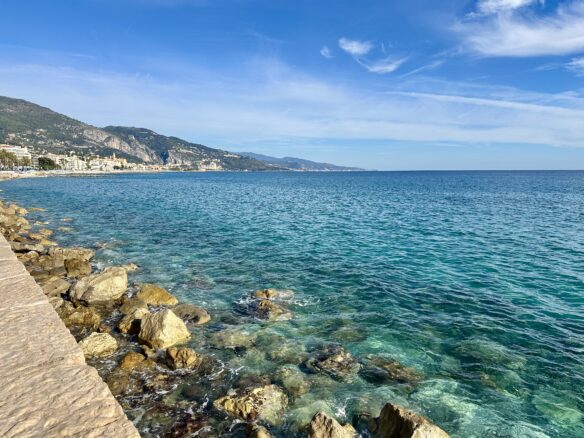
From Menton, it’s a short train ride to many fantastic Cote D’Azur destinations in France and Italy. It’s also only around a 20 minute train ride to Monaco as well. It’s much less expensive to stay in or around Menton and explore the ritzy principality on day trips to Monaco, which I recently did. You can also literally walk across the Italian border from Menton, which is a lovely coastal stroll I enjoyed. The nearby Cap Martin coastal path towards Monaco is extraordinarily beautiful, and a must when in the area.
Menton, France is popular for its beaches and charming old town, featuring many pedestrian only cobblestone streets. Its regional cuisine features an array of popular French and Italian favorites from magret de canard to pesto. The neighboring Liguria region of Italy is the birthplace of pesto. I took a short day trip to Ventimiglia, Italy and enjoyed the best pesto pasta I’ve ever eaten. Menton truly makes for a wonderful base to explore the magnificent French Riviera.
3. Arles
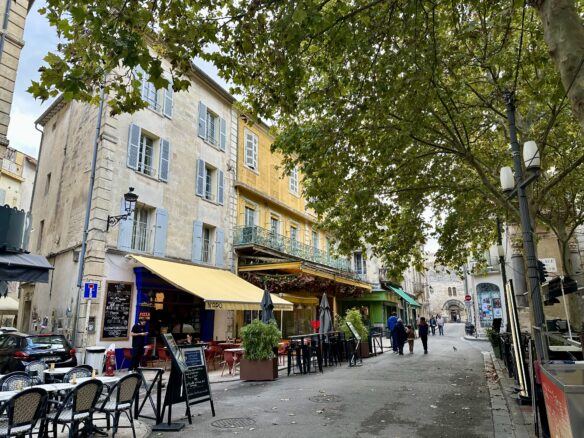
Arles, France is a lovely town nestled along the Rhône River in southern France, around 45 minutes from Marseille. Its historic center encapsulates small town French charm. Vibrant colors, magnificent sites and quaint cafe terraces have inspired famous artists like Vincent Van Gogh, Paul Gaugin and many others. Arles also houses a nearly 2,000 year old Roman amphitheater in its center, modeled after the Colosseum in Rome.
Vincent Van Gogh left Paris for Arles in February 1888, where he sought to establish an artists community thanks to financial assistance from his art dealer brother, Theo. The 15 months Van Gogh spent in Arles were the most prolific period of his career. He painted around 300 works there in a frenzy of inspiration.
The Van Gogh Route is a popular route in Arles that guides visitors to important landmarks where Vincent Van Gogh painted some of his most renown paintings. Several locations along the trail, including where Van Gogh painted Café Terrace at Night (a personal favorite of mine), feel like stepping into the vibrancy of his colorful artistic brilliance.
Sit across the street from Arles Amphitheatre and enjoy a drink and a meal, and you’ll understand why artists like Van Gogh found inspiration in Arles.
4. Saint Emilion
Saint Emilion is a UNESCO World Heritage Site and one of the most idyllic wine towns in the Bordeaux region. The charming medieval town is situated at the crossroads of Bordeaux, Saintonge and Périgord, surrounded by picturesque rolling vineyards. Its renown for its prestigious red wine, including its appellation Grands Crus Classés.
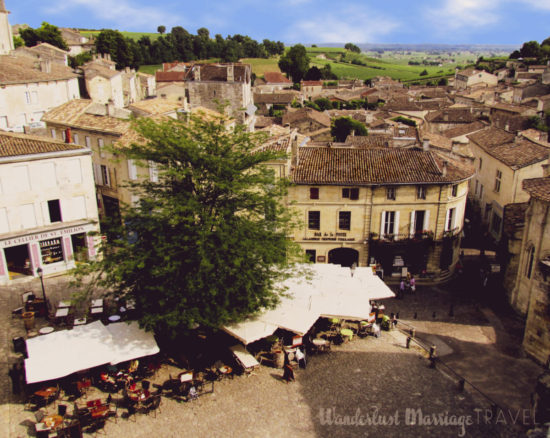
Saint Emilion is very touristy, but it retains a semblance of authenticity and charm in its beauty. Meandering the lovely town’s cobblestone streets while enjoying delicious wine and gelato is a lovely experience. Enjoy a delicious al fresco meal at a restaurant terrace in the main square, like a traditional magret de canard, with a gorgeous view of the Monolithic Church of St. Emilion.
Wine production accounts for over €14 billion ($15 billion+ USD) of revenue for the Bordeaux region annually. That’s greater than the Gross Domestic Product of many countries! The robust flavors of smooth Bordeaux wines are a personal favorite of many, and Saint Emilion is one of the best towns to enjoy some fine vintages.
5. Cannes
Cannes is most famous for its annual Cannes Film Festival. Founded in 1946, the prestigious invitation only celebrity filled 12 day event takes places every May. So most people should visit outside this time, unless you’re keen on overpaying for potential celebrity sightings.
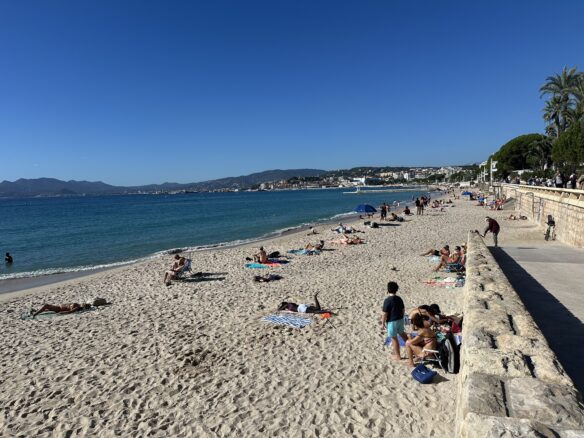
Cannes is a resort town popular for its sandy beaches, high end restaurants and ritzy shops. But the town isn’t just for wealthy people, and there is a diverse selection of accommodations and eateries to suit more budget conscious travelers also.
Stroll the Cannes Walk of Fame (locally known as Le Chemin des Étoiles) in front of the Palais des Festivals to witness the town’s relationship with movie stars. There are around 400 handprints and signatures featuring cinema legends like Penélope Cruz, Spike Lee, Meryl Streep and Sylvester Stallone.
The Cannes sign (similar to the Hollywood sign) atop a hill near Musée de la Castre is an idyllic photo spot. The view overlooking Cannes and the Mediterranean Sea is magnificent.
6. Avignon
Located in southeastern France’s Provence region, Avignon is a UNESCO World Heritage Site. From 1309-1377 it was the seat of the Roman Catholic Church when it temporarily moved from the Vatican in Rome.
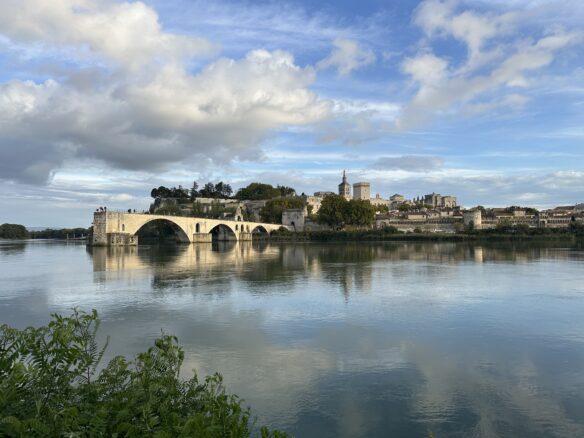
Seven consecutive popes resided in Avignon and this fascinating history can be explored by visiting the Palais de Papes. The “Palace of Popes” is the largest and most significant medieval gothic palace and fortress in Europe.
The central market of Le Halles des Avignon features around 40 merchants and is a wonderful way to experience the culinary delights of Provence. The vibrant covered market features an array of delicious delights between sit down French classics, fresh produce, vegetarian options or just sipping a drink at a bar. It’s one of the best and most vibrant markets I’ve visited in France.
Another unique highlight of Avignon, France is its iconic “bridge to nowhere.” Pont Saint-Bénézet, otherwise known as Pont d’Avignon (Bridge of Avignon) is a famous medieval bridge extending across part of the Rhône River. It was originally built in the 12th century and subsequently damaged by floods over the centuries. A walk across what’s left of the bridge offers magnificent views of beautiful Avignon.
7. Nimes
Located in the Occitanie region of southern France, Nimes was a significant outpost of the Roman Empire. The impressive Arena of Nîmes is an amphitheater dating to 70 AD that was modeled after the Colosseum in Rome. Climb up the top steps of its bleachers for fantastic views overlooking Nimes. Still in use for bullfights and concerts, it’s one of the most impressive historical sites I’ve visited in France.
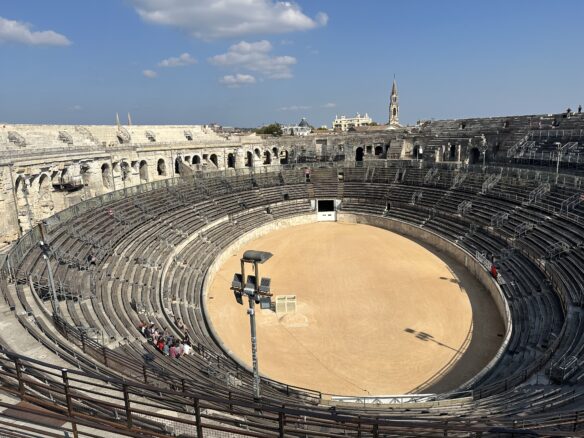
The Feria de Nîmes draws throngs of visitors to town in both the spring and fall. The multi-day festival features Spanish-style bullfighting and local Camargue traditions. Feria de Pentecôte in late May or early June features parades, concerts and bullfights at the Nimes amphitheater. The Feria des Vendanges (Harvest Feria) held in mid-September celebrates the grape harvest. Tip: If you visit in the subsequent weeks after either feria be sure to order the local stew in a restaurant which includes meat from the bullfights. The Gardiane de taureau stew is rich, flavorful and a regional classic.
Nearly 2,000 years old, the magnificent and well preserved Maison Carrée is among the oldest surviving Roman temples. The white limestone temple was dedicated to the presumptive heirs of Augustus in what was then the Roman colony of Nemausus. Be sure to visit it in when in Nimes (it doesn’t take long to tour its compact interior).
Just outside Nimes, Pont du Gard is the tallest surviving Roman aquaduct bridge in the world. The tri-level aquaduct relic towers 49 meters and was constructed nearly 2,000 years ago to supply drinking water to the Roman colony, which eventually became Nimes.
8. Rouen
Located around 2 hours northwest of Paris along the Seine River, Rouen is the capital of Normandy. The town’s history dates to the Roman era and was particularly significant during Medieval times. Rouen features around 2,000 half timbered houses, which is more than any other destination in France. If you guessed Strasbourg like I did, you’re in for an equal surprise exploring Rouen’s many delightful medieval era buildings.
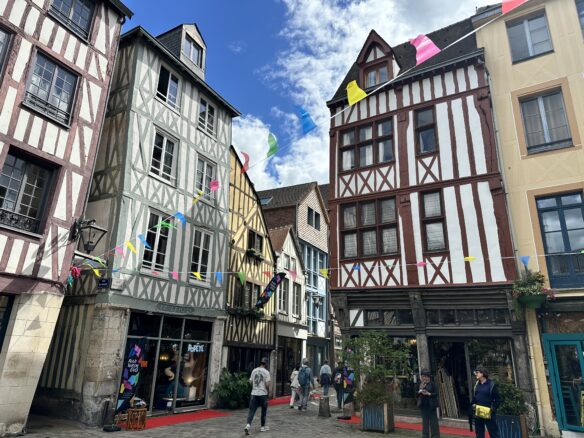
The spires of Cathédrale Notre-Dame tower over Rouen and were painted by renown Impressionist Claude Monet. But bigger than Monet in Rouen is Joan of Arc, the patron saint of France. At just 19 years old, Joan of Arc was tried for heresy and witchcraft in English controlled Rouen in 1431 and quickly burned at the stake in the Old Marketplace. But her heroic endeavors were salvaged when King Charles VII of France declared her a martyr in 1456 and she was subsequently canonized by Pope Benedict XV in 1920. Shaped like an overturned longship, Saint Joan of Arc Church was constructed in her honor in 1979 where she was executed.
The Archbishop’s Palace houses the Historial Jeanne d’ Arc. From its Grand Attic to its Gothic Crypt, visitors experience a complete immersion in the history of her world famous story. I enjoyed my visit and appreciated the English audio guide.
Rouen is also a great town for foodies. And many of the town’s restaurants offer excellent value on French and regional dishes as well, with ample choices around €18 ($20 USD). In addition to great wine, there are excellent local breweries and many bars feature fantastic beer selections with a wide range of delicious Belgian beers to boot.
9. Wimeraux
A historic French seaside town along the Opal Coast, Wimereux is a great vacation destination. Just minutes from the Calais ferry terminal, Wimereux features a lovely promenade, sandy beaches and fantastic Belle Époque villas. Many of the beautiful 19th-century villas were originally constructed for wealthy Parisians and industrialists.
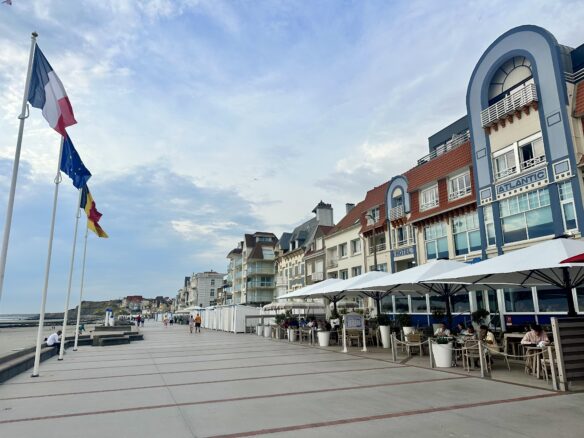
Wimereux’s restaurant’s serve great seafood, including local mussels and oysters. It’s an idyllic spot to lap up French vacation culture. We loved having a delicious sausage board with drinks along the beach. The coastal path to Boulogne-sur-Mer features rugged cliffs and is strikingly beautiful and relatively easy to walk.
Wimereux offers a relaxed atmosphere compared to more bustling seaside towns like nearby Calais. It’s charming for a couples getaway.
10. Antibes
Idyllically located between Cannes and Nice along the French Riviera (Côte d’Azur), Antibes is a lovely town. Its charming old town features many pedestrian only streets dotted with boutique shops and artists studios. The town is surrounded by ramparts dating to the 16th century, highlighted by the star-shaped Fort Carré.
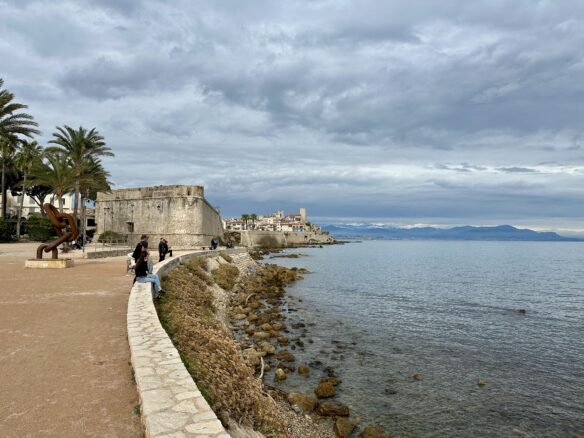
Antibes has been a popular artists haven for decades. Right off the water, the Picasso Museum is a notable highlight. Nearby, the most famous Greek writer of the 20th century, Nikos Kazantzakis (Zorba, Last Temptation of Christ) resided in Antibes over the final years of his life. While you can’t tour the inside of Maison Kazantzakis as it’s a private residence, the exterior is gorgeous and marked with a plaque in his honor.
Personally, the laidback vibe of Antibes, France gelled with me more compared to Cannes, as the latter is often more flashy. But both destinations offer excellent bases to explore the French Riviera.
11. Amiens
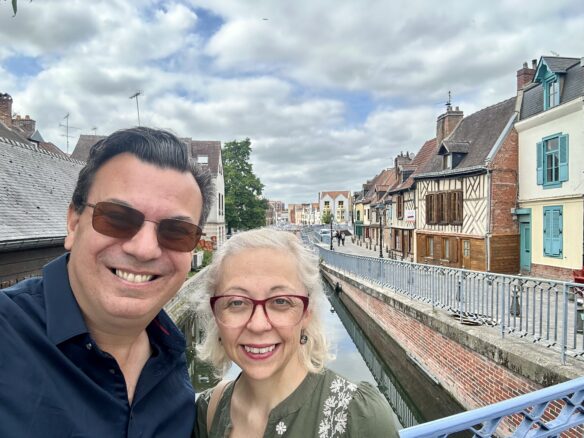
Amiens is a unique French town located around 1 hour by train northeast of Paris. Its charming Quartier Saint-Leu district is coined the “Little Venice” of the area. Half-timbered houses dot its narrow canals, which house lively outdoor riverside restaurants and cafes.
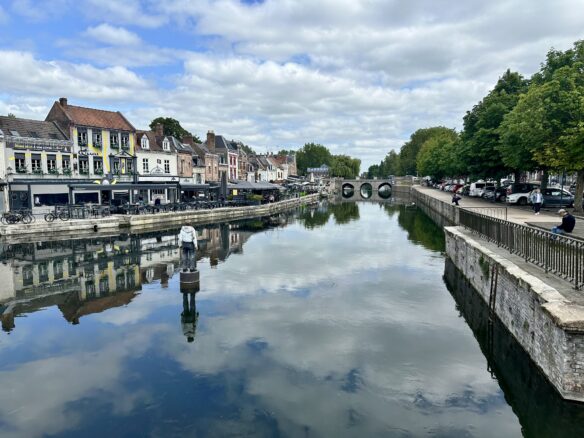
Constructed between 1220 and 1270, Amiens Cathedral is the largest Gothic church in France and nearly twice the size of Notre Dame in Paris! It’s also renowned for its intricate medieval sculptures. Amiens Cathedral has been a UNESCO World Heritage Site since 1981.
Another unique highlight is Les Hortillonnages. The 300-hectare network of ancient floating market gardens can be toured by electric or manual flat-bottom boats.
One of France’s most famous writers, Jules Verne resided in Amiens for over 30 years, until his death in 1905. Visitors can learn more about the author of 80 Days Around the World and 20,000 Leagues Under the Sea at his former residence, which is now a museum, the Maison de Jules Verne. Verne resided in that home from 1882-1900, during many of his most prolific years of writing.
Le musée de Picardie is a fantastic museum in Amiens, France with an impressive collection of paintings, sculptures and artifacts.
12. Sete
Sete is known as the “Venice of Languedoc.” And while it may not be as pedestrian friendly or have the grandeur of Venice, Italy it is a unique French destination. Sete is renown for its French Mediterranean charm, 12km of sandy beaches and fresh seafood galore.
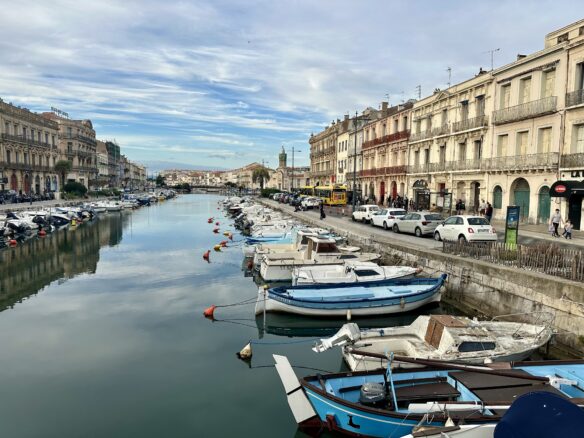
Albeit less glamorous, Sete offers an interesting alternative to more touristy destinations along the French Riviera. It’s only around 25 minutes from Montpelier, making it a laid back base to explore the region.
There are ample opportunities to dine al fresco along the canals in Sete. Though those tend to be touristy restaurants, so skip those if you’re looking for a more local experience. La Pointe Courte features wooden huts along the water and is known for its village-like atmosphere.
Unique French Towns Recap
France is a country of around 70 million people, filled with an array of exciting and diverse destinations. So sometimes it can be difficult to choose where to visit. When deciding, it’s best to think about your interests as well as the time of year you’re traveling. Spring and autumn are idyllic seasons to visit destinations in the south of France. If you’re traveling in summer, I generally recommend destinations in the north due to extreme heat. Happy travels and feel free to get in touch if you have any questions!




 Pre Move-Out Inspection Blueprint: Crucial Steps for Both Landlords and Tenants
  10 of the Most Charming Towns in Germany to Visit