
Germany is one of Europe’s most popular countries for exploring historic castles, charming old towns, relaxing in thermal baths and indulging in delicious beers, wines, schnapps and traditional dishes. The German National Tourist Board lists 17 historic heritage cities, which are medium sized destinations that feature well maintained historic centers and are culturally significant. Based on many trips to Germany spanning multiple decades, here are 10 of the most charming and unique towns to visit, with firsthand tips for visiting them!
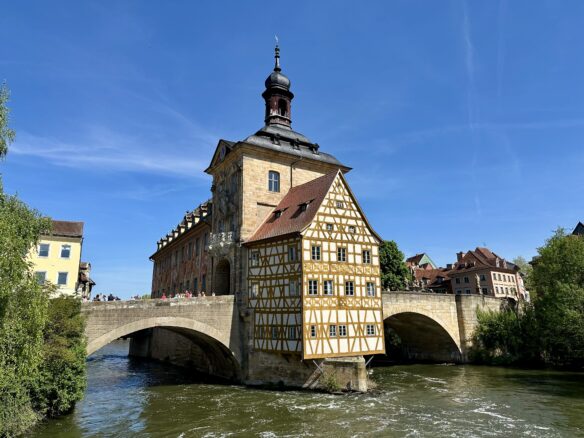
1. Lübeck
Founded in 1143, Lübeck is reminiscent of a miniature version of Amsterdam or Hamburg. The town’s beautiful historic center is recognized as a UNESCO World Heritage Site. Impressive gothic brick architecture and quirky guild houses, nestling alongside an abundance of waterways is simply a pleasure for visitors to experience.
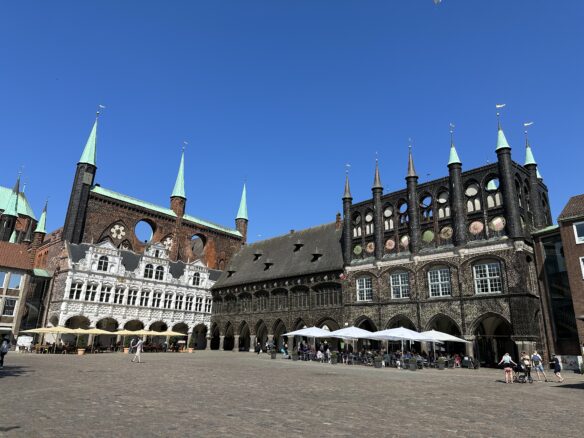
On beautiful summer days, with warm, yet mild temperatures, Lübeck is a lovely destination for dining al fresco. The energy among many locals, enjoying canal-side picnics with their friends and partners offers a fantastic vibe. Lübeck is also a bicycle-friendly city with ample dedicated lanes, which is great for staying active and keeping some cars off the roads.
Surrounded by the Trave and Wakenitz rivers, Lübeck, Germany is located 42 miles (67 km) northeast of Hamburg, which is the closest major airport. It is also just 12 miles (19 km) from the Baltic Sea beach town of Travemünde, another lovely destination, particularly in summer. Lübeck has a wealth to offer visitors between striking gothic architecture, world class museums, delicious seafood and tasty desserts like marzipan. It is one of the best destinations in North Germany.
2. Freiburg im Breisgau
Nestled amidst the Black Forest (Schwarzwald) near the borders of Switzerland and the Alsatian region of France, Freiburg im Breisgau is a charming and vibrant town. Dating to the early 1200’s, Freiburg Cathedral towers over a well preserved historic center. A fantastic outdoor market surrounding the cathedral comes to life six days a week at Muenstermarkt in Munsterplatz. Up to 130 stalls feature a huge selection of freshly grilled sausages, artisan cheeses, meats, fresh produce and more.
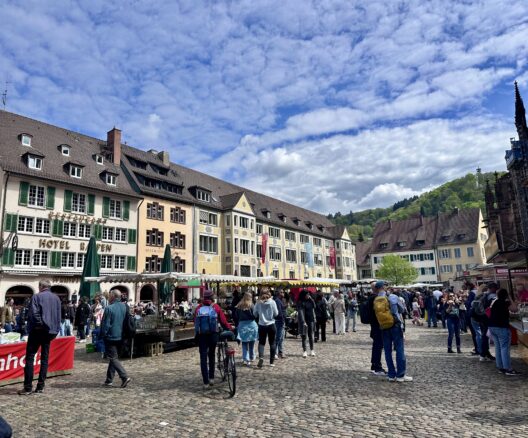
A sizable student population keeps Freiburg youthful. There are ample good restaurants, food stalls, a great market hall and lively bars to enjoy hearty local dishes and drinks. Be sure to try a piece of Black Forest Cake, which is ubiquitous in patisseries and on restaurant dessert menus.
It’s fantastic and convenient to enjoy a picturesque hike with the Black Forest literally on Freiburg’s doorstep. There’s even a wonderful beer garden, Kastaniengarten, which offers a sweeping view overlooking Freiburg and the surrounding forested mountains.
Basel, Switzerland is less than an hour by train, and a lovely destination along the Rhine River. Some small accommodations in Freiburg include a complimentary KONUS Guest Card for free public transportation in the region of Baden-Württemberg, which you can use on regional trains (not the ICE trains), including traveling to Basel, Switzerland, which is a fantastic day trip! Other great day trips include Breisach, Black Forest towns like Titisee and nearby spa towns like Bad Krozingen and Bad Bellingen for their thermal baths.
3. Heidelberg
Heidelberg is unquestionably one of Germany’s most beautiful towns. Its historic center rests along the Neckar River, amidst a forested valley. Perched atop Königstuhl Hill, the red-sandstone ruins of Heidelberg Castle offer an excellent example of Renaissance architecture. Hike the Philosopher’s Trail, on the northern banks of the Neckar River to enjoy a dramatic view overlooking The Karl Theodore Bridge, Old Town, and Heidelberg Castle.
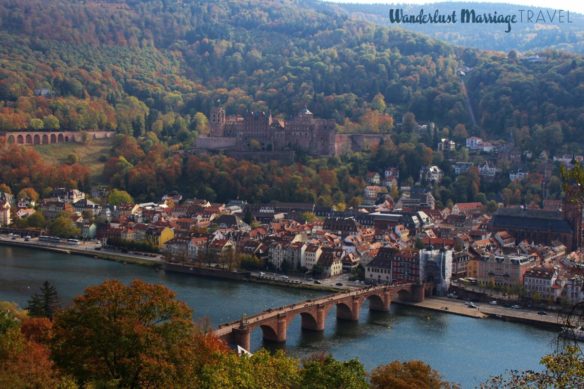
Founded in 1386 on the instruction of Pope Urban VI, Heidelberg University is Germany’s oldest university. The town’s sizeable student population means there are ample hip bars to soak up the atmosphere over a drink. Visit a cozy restaurant like Weinstube Schnitzelbank to enjoy a delicious schnitzel alongside a great German brew.
I recommend visiting Heidelberg in October, during peak autumn foliage. The vibrant foliage offers an explosion of colors around the city. Heidelberg is just an hour by train from Frankfurt, Germany.
4. Koblenz
At the confluence of the Rhine and Moselle Rivers, Koblenz wows visitors with dramatic vistas along its waters. The area is also home to some of Germany’s best wineries, with high quality rieslings taking center stage. Enjoying quality local drinks is among the highlights of travel, and I was impressed by the rieslings I enjoyed in Koblenz, especially given the prices for generous sized glasses of .2 cl are quite reasonable at around €7 ($8 USD).
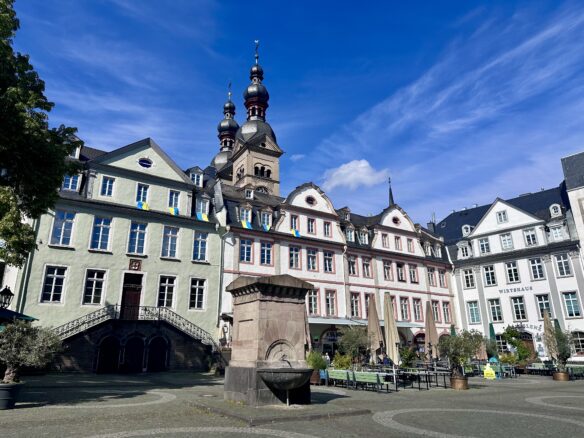
Koblenz is the heart of the scenic ‘Upper Middle Rhine Valley,’ a UNESCO World Heritage Site since 2002. It is an idyllic destination for hiking trips, cycling tours, river cruises and wine tourism. A large number of historic medieval castles line the Rhine River. They’re incredible to view whether on a river cruise, train trip, cycling trip or driving along the Rhine River.
During World War II, much of Koblenz was destroyed, Following Nazi defeat in 1945, Koblenz fell under the French occupation zone. Today French influence remains through a cultural fusion of warm hospitality, cozy terraces and fantastic wine bars.
5. Baden-Baden
Baden-Baden is a historic spa town nestled along Germany’s Black Forest, close to the border with France. The town’s thermal baths blossomed to become a fashionable 19th-century resort town, which continues today. The town offers a wide variety of accommodation, including the opulent 5 star Brenners Park Hotel and Spa.
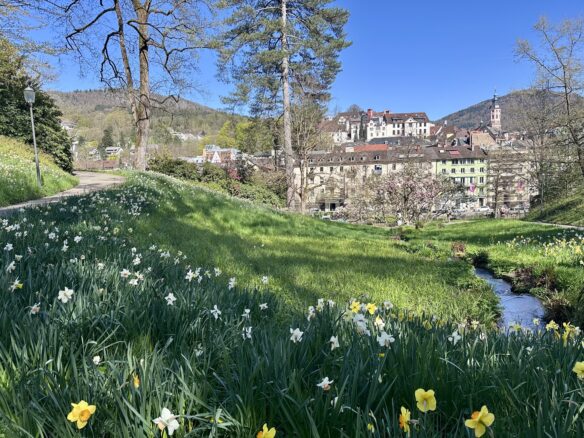
There are two significant thermal baths in Baden-Baden. Dating to 1877, Friedrichsbad is a historic Renaissance-style building. Famous guests of Friedrichsbad have even included Mark Twain. Caracalla Spa is a modern and more spacious facility with more guests. I enjoyed visiting both and recommend that if you have a chance. Otherwise choose Friedrichsbad for the more unique experience. There are other thermal baths around Germany more similar to Caracalla Spa.
The Kurhaus complex is especially lovely in spring, with ample flowers in its garden. It also features the opulent, Versailles-inspired Spielbank (casino). Strolling along the town’s quaint Oos River is an absolute delight, and relaxing in and of itself. I highly recommend having a delicious slice of Black Forest Cake at Cafe Konig, which is a popular institution that serves a wide variety of eye candy pastries in a charming setting.
6. Bamberg
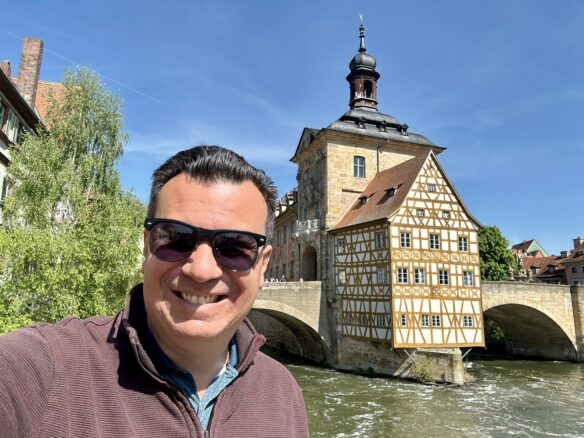
Bamberg is undoubtedly one of Germany’s most charming and popular towns for visitors. It has been a UNESCO World Heritage Site since 1993. Bamberg is one of Germany’s most charming destinations to enjoy a delicious local meal on a terrace, while soaking up the town’s relaxed ambiance.
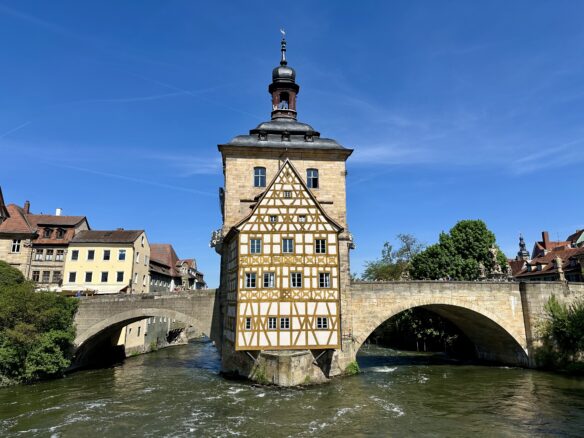
Bamberg is nestled at the confluence of the Regnitz and Main rivers, resting atop seven hills. The town’s “Little Venice” district, featuring fishermen’s houses built directly along the water, is idyllic for a stroll.
Bamberg’s well preserved old town features structures from the 11th to 19th centuries. A significant highlight is the muraled Altes Rathaus (town hall), which sits atop an island in the Regnitz connected by arched bridges. Another highlight is 11th century Bamberg Cathedral, the Romanesque structure features four towers and impressive art, including many stone carvings.
Bamberg is about an hour away from Nuremberg, Germany, another fantastic and historic destination that’s home to Germany’s oldest Christmas market. I enjoyed visiting Bamberg last year while re-visiting longtime friends in Nuremberg.
7. Wiesbaden
Wiesbaden is a historic town that’s idyllic for culture, nature and enjoying thermal baths. The capital of the German state of Hesse became especially famous as a spa town in the 18th and 19th centuries. Spanning 26 healing springs, The town’s long spa tradition can be traced to Roman times.
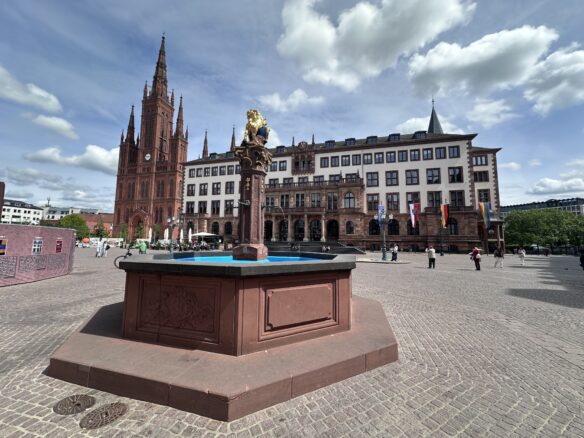
The historic Kaiser-Friedrich-Terme, built upon the remains of old Aquae Mattiacorum, is conveniently located in the heart of Wiesbaden. The unique Irish-Roman bathhouse was completed in 1913. I was immediately impressed upon entering, as the foyer is adorned with elaborate stucco works. Just know that Kaiser-Friedrich-Therme closes in summer from June 1st through August 31st. During summer months, head to Thermalbad Aukammtal as they’re open and have outdoor thermal pools, which are great on warm days.
Vast city parks like Kurpark are wonderful to stroll amidst ample flowers and ponds. I was not surprised to see an art class painting in the park during my visit there. Catch the funicular to get a wonderful view overlooking town. It’s also a tranquil setting for enjoying a refreshing drink and a light bite, like a fresh pretzel.
Just across the Main River from Wiesbaden is another great Germany town, Mainz, which is the charming capital of Rhineland-Palatinate. A notable highlight of Mainz is the Gutenberg Museum, which honors the inventor of the printing press, Johannes Gutenberg. Exhibit highlights there include two original Gutenberg bibles.
8. Regensburg
Regensburg is one of Germany’s most historically rich and charming towns. Located along the Danube River in Bavaria, this beautiful destination is renown for its well preserved medieval old town, vibrant cultural life and Roman origin. The Old Town of Regensburg has been recognized as a UNESCO World Heritage Site since 2006 for being “an exceptional example of central-European medieval trading centre, which illustrates an interchange of cultural and architectural influences.”
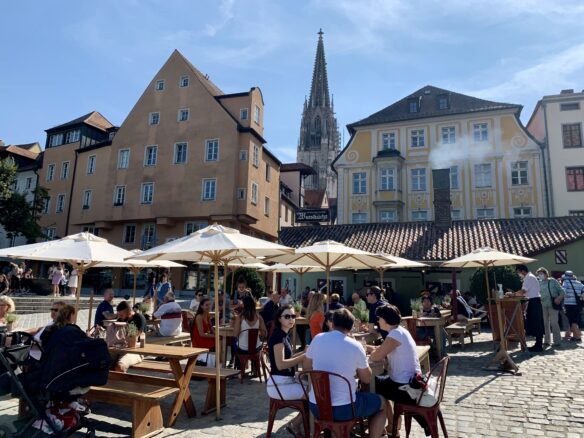
Regensburg prides itself on its long history of wursts (sausages) that rivals the more famous Nuremburg wursts. Historische Wurstkuchl is one of the longest continuously operating kitchens in the world, standing over 500 years. It’s lovely to sit on their terrace along the Danube River near the Stone Bridge and enjoy charcoal grilled pork sausages served with housemade sauerkraut and mustard.
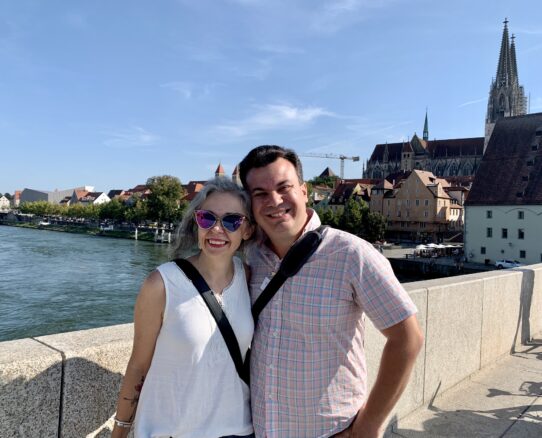
One of the many highlights of visiting Germany is the country’s wealth of great beer gardens, often located in beautiful historic centers and amidst lush parks. Regensburg has one of the loveliest beer gardens I’ve visited, Spitalgarden. Spitalgarden is located right along the Danube River, and offers striking views of Regensburg’s medieval Altstadt, the Stone Bridge and Regensburg Cathedral.
Regensburg is also a popular river cruise destination. We enjoyed the historic town’s highlights during a 7 day Danube River cruise aboard Emerald Cruises a few years ago.
9. Würzburg
Würzburg is a beautiful destination along the Main River that offers an idyllic blend of culture, history and wine. With a population of around 130,000 people, it is the second largest town in the Franconian region of Bavaria after Nuremberg. Among the notable highlights is the 18th century Würzburg Residence Palace, which features lavish baroque and rococo architecture and is a UNESCO World Heritage Site.
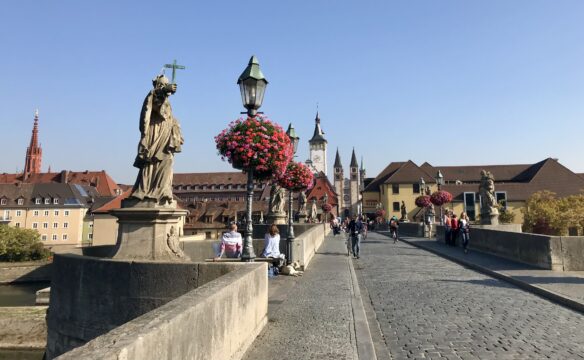
The most postcard worthy photo of Würzburg encompasses Marienberg Fortress, perched above town, with Old Main Bridge (Alte Mainbrücke) below. The 180 meter long bridge is dotted with intricate statues of saints. This area reminds me of Charles Bridge and Prague Castle in the Czech capital, which is arguably the most scenic spot in that city also. Prague is often regarded as one of the world’s most beautiful cities, and outside Germany, Würzburg is less renown among other German towns. But I was truly impressed with the rival images in these two towns.
Würzburg is surrounded by vineyards and dotted with atmospheric wine bars. I highly recommend having a wine on Old Main Bridge at Mainwein Weinbistro, which features a striking view of Marienberg Fortress across the long historic bridge. The beautiful setting, featuring a great selection of local wines and regional cuisine is idyllic to include in a romantic getaway in Germany.
10. Bonn
Bonn is the former capital of West Germany. It was also the birthplace of one of history’s most famous music composers, Ludwig van Beethoven. His childhood home is now a museum and one of Bonn’s most popular tourist attractions. The Beethoven House serves as “a cultural institution comprising a museum, research center, concert hall, collection, library, and publishing house.”
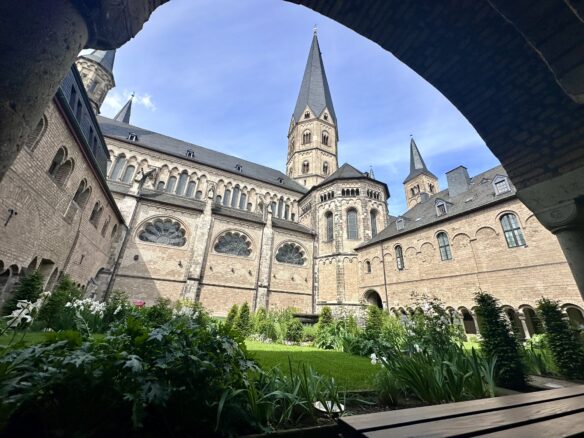
Bonn’s walkable historic center is packed with great local restaurants, cafes, brewpubs, local bakeries and ample shopping options. Altes Rathaus is a beautiful 1730’s era Rococo style town hall that highlights the central square. There’s a daily market there that’s great for grabbing a quick lunch, dessert, local cheeses, fresh produce and more.
Museum Mile features several great museums, including House of the History of the Federal Republic of Germany. Its collection features a wide assortment of 20th century artifacts. The museum offers important history lessons that as a society, we should not forget. A bonus is that admission to the House of the History of the Federal Republic of Germany is free.
Recap
Germany is packed with an abundance of historic highlights and charming destinations. If you fly into one of Germany’s major airports, I recommend spending a few days in that city before delving off to explore some of the great towns on this list. That way you can enjoy a wide variety of experiences and witness different paces of German life.




 12 of the Most Unique Towns in France to Visit
  How To Plan a Nature Escape With Your Loved One
Good post! We will be linking to this particularly great post on our site. Keep up the great writing